

For small businesses, company branded merchandise is more than putting a logo on a giveaway. It is a practical way to keep a business visible through products customers, employees, and prospects can actually use. From coffee mugs and pens to bags, apparel, and tech accessories, branded products can turn everyday items into ongoing brand exposure. In the USA, where small businesses compete across crowded local and online markets, the right merchandise can support awareness, customer relationships, events, employee engagement, and sales.
The U.S. branded merchandise market is substantial. A 2026 PPAI/Oxford Economics study estimated $174 billion in branded merchandise spending in the United States in 2025, including $50 billion in promotional products. That scale reflects how physical branded products have become part of modern marketing rather than simply being occasional trade-show giveaways.
What Is Branded Merchandise?
Branded merchandise refers to physical products customized with a company’s name, logo, colors, message, slogan, or other identifying elements. The concept is simple: instead of promoting a business only through advertisements, social media, email, or search, a company puts its branding on something people can use in their everyday lives.
Common examples include:
- Branded pens and stylus pens
- Coffee mugs and tumblers
- T-shirts, hoodies, and hats
- Tote bags and backpacks
- Water bottles
- Notebooks and journals
- Desk accessories
- Tech accessories
- Employee gifts
- Trade-show giveaways
- Customer appreciation gifts
The important difference is usefulness. A product that someone genuinely wants to keep has a better opportunity to keep the business visible. Recent PPAI consumer research also points toward useful, well-designed merchandise rather than disposable promotional items.
Why Branded Merchandise Matters for Small Businesses
Large companies can spend heavily on advertising. Small businesses often have to make every marketing dollar work harder. That makes merchandise particularly interesting because one purchase can serve several purposes. A branded mug can become a customer’s everyday coffee cup. A stylus pen can stay on a desk. A tote bag can travel to stores, offices, gyms, or events. An employee hoodie can put the company’s identity in front of people outside the workplace. This creates repeated physical exposure without requiring the recipient to actively search for the business.
Promotional products can also support several business objectives at the same time:
- Brand awareness: Your logo stays visible after the initial interaction.
- Customer appreciation: A useful branded item can make a purchase or relationship feel more personal.
- Lead generation: Merchandise can encourage people to stop at a booth or speak with your team.
- Employee engagement: Branded products can help employees feel connected to the company.
- Retention: Thoughtful customer gifts can strengthen relationships beyond a single transaction.
For a small business, that flexibility is valuable.
Company Branded Merchandise Should Match Your Business
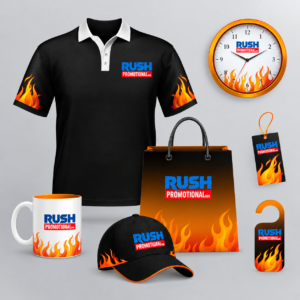
One of the biggest mistakes businesses make is choosing merchandise simply because it is inexpensive.
The better question is:
Would my target customer actually use this?
A construction company might benefit from durable drinkware, caps, workwear, or practical tools. A technology company may prefer stylus pens, charging accessories, notebooks, or modern desk products. A coffee shop could focus on mugs, tumblers, reusable bags, and apparel.
The product should make sense for the audience.
For example, a premium accounting firm handing a client a low-quality plastic item may send the wrong message. A well-designed metal pen or quality mug can feel much more consistent with a professional brand.
This is why product selection should come before simply deciding how many items to order.
Promotional Stylus Pens Bring Branding to the Desk
Promotional stylus pens are a practical choice for businesses that want a relatively compact product with everyday functionality. A traditional pen is useful, but a stylus pen adds another function for smartphones and tablets. That makes it relevant to customers who regularly switch between handwritten notes and digital screens.
They can work especially well for:
- Technology companies
- Real estate businesses
- Financial services
- Healthcare offices
- Educational organizations
- Professional services
- Conferences and trade shows
For eCommerce buyers, the important consideration is not simply whether a stylus pen can carry a logo. Look at the writing quality, grip, material, imprint area, color options, and overall appearance. If the pen feels comfortable and works reliably, recipients are more likely to keep using it.
Promotional Mugs in USA: A Simple but Effective Choice
Promotional mugs in USA remain a strong option because coffee and tea are already part of many people’s daily routines. A mug gives a business a larger printable surface than many small promotional products. That creates room for a logo, tagline, website, campaign message, or even a simple graphic.
Mugs can be used for:
- Customer appreciation
- Employee welcome kits
- Holiday gifting
- Office promotions
- Coffee shop marketing
- Corporate events
- Conferences
- New-client packages
However, not every mug needs to be handed out to everyone. A small business could instead create a more targeted campaign. For example, a real estate company might give branded mugs to new homeowners, while a consulting firm could include a premium mug in a client onboarding package. The goal is not maximum distribution. It is meaningful distribution.
How to Choose the Right Merchandise for Your Budget
A small-business merchandise budget should be planned around the purpose of the campaign.
| Business Goal | Suitable Merchandise | Best Use |
| Brand awareness | Pens, tote bags, mugs | Events and everyday distribution |
| Customer appreciation | Premium mugs, drinkware, gifts | Existing customers |
| Lead generation | Pens, stylus pens, bags | Trade shows and events |
| Employee onboarding | Apparel, mugs, notebooks | New-hire kits |
| Client gifting | Premium drinkware, journals | High-value relationships |
| Local marketing | Bags, hats, mugs | Community events |
| Online orders | Branded inserts and gifts | eCommerce customer experience |
Think about cost per recipient, not just the total order price. For example, ordering 500 inexpensive products may seem attractive. But if recipients do not use them, the apparent savings may not produce much marketing value. A smaller quantity of better-selected merchandise can be more useful.
Quality Can Change How Customers See Your Brand
Your merchandise becomes part of your brand experience. If the product breaks quickly, has poor printing, or feels uncomfortable, the recipient may associate that experience with the business. The opposite is also true. A durable mug, comfortable shirt, smooth-writing pen, or well-made tote can communicate attention to detail.
PPAI’s 2026 consumer research found that people increasingly view branded products as lifestyle items rather than simple freebies, with usefulness, design, and quality influencing whether products are kept. That is particularly important for small businesses because every customer interaction contributes to reputation.
How eCommerce Businesses Can Use Branded Merchandise
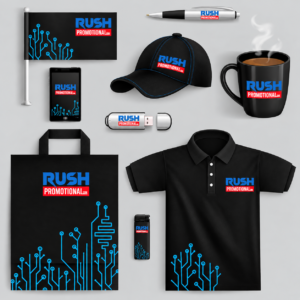
Branded merchandise isn’t limited to physical stores. Online businesses can use promotional products as part of their customer experience.
For example, an eCommerce company could:
- Add a small branded product to orders above a certain value.
- Include branded merchandise in loyalty-member packages.
- Send gifts to repeat customers.
- Create limited promotional bundles.
- Add branded items to influencer or partner packages.
- Use merchandise for seasonal campaigns.
- Include company-branded products in employee or vendor packages.
This approach makes the product part of the customer journey rather than treating it as a separate marketing activity. A $50 order, for example, could receive a useful branded mug during a seasonal promotion. The customer gets something valuable, while the business creates another physical touchpoint.
Branded Merchandise for Trade Shows and Local Events
Trade shows remain one of the most obvious applications for promotional products, but businesses should avoid choosing merchandise solely because it is easy to hand out.
A crowded event can produce hundreds of giveaways.
The objective should be to give visitors something they will remember and use after leaving.
A quality stylus pen, reusable bag, mug, notebook, or drinkware item can be more practical than a novelty product that immediately ends up in a drawer.
For smaller businesses, it can also help to connect the item with an action. For example:
Visit the booth → discuss your service → receive a useful branded item.
That creates a natural conversation instead of simply giving something away.
Make the Branding Easy to Recognize
Effective merchandise does not need to be complicated. In most cases, a clear logo, recognizable brand color, short message, and readable contact information are enough. Avoid covering every available surface with text. A clean design can make merchandise feel more premium and wearable. This matters especially for apparel, mugs, bags, and products that customers may use in public. Before approving a large order, check the artwork carefully and request a proof when available. Review logo proportions, spelling, colors, placement, and imprint size. Small design mistakes can become expensive when they are repeated across hundreds of products.
Why Useful Merchandise Can Support Long-Term Brand Visibility
Digital advertising is designed to capture attention for a moment. Merchandise works differently. A physical product can remain in a customer’s home, office, vehicle, or bag and continue appearing in daily routines. That does not mean every branded product automatically delivers results. Product relevance, quality, distribution, design, and audience all matter.
But when these pieces work together, merchandise becomes an ongoing reminder of the company. For small businesses competing against larger brands in the USA, that repeated visibility can be valuable.
Build a Merchandise Strategy That Fits Your Business
Branded merchandise does not have to mean ordering thousands of random promotional products.
Start with one business objective.
Do you want more visibility? Choose everyday products.
Want to thank customers? Select something useful and slightly more premium.
Need trade-show giveaways? Choose compact products that are easy to carry.
Building an employee welcome kit? Combine several products into one cohesive package.
For businesses exploring promotional products online, Rush Promotional offers options that can help companies build merchandise around different audiences, campaigns, and budgets. The focus should always remain on choosing products that fit the brand and provide genuine value to the recipient.
Turn Your Logo Into Something Customers Actually Use
The best branded merchandise is not necessarily the most expensive item. It is the product that fits naturally into someone’s life. A useful mug can become part of a morning routine. A quality stylus pen can stay on a desk. A branded tote can travel around town. A well-designed piece of apparel can turn a customer into a walking brand ambassador. For small businesses, that makes merchandise more than a giveaway. It can become a practical part of customer engagement, employee recognition, event marketing, and eCommerce growth.
Ready to put your brand in customers’ hands? Explore the right promotional products for your audience, choose products people will genuinely use, and make your next campaign count. Shop now with Rush Promotional and turn everyday merchandise into lasting brand visibility.

1 Comment
Comments are closed.